
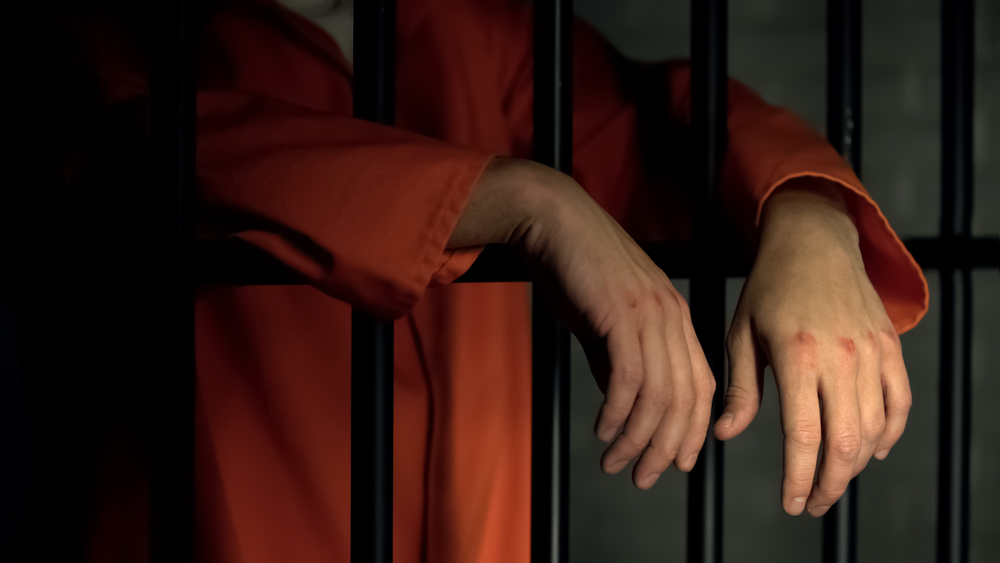
How long you would be in jail for killing someone depends on the exact charge and the facts of the case. In Wichita and across Kansas, a death can lead to several different homicide charges. Each one has a different sentencing range. The court looks at intent, the situation leading up to the death, the use of a weapon, and a person’s criminal history. Because of that, two cases that both involve a death can end with very different prison terms.
Capital murder
Capital murder is the most serious homicide charge in Kansas. It applies only in specific situations set by law, such as killing a law enforcement officer, killing more than one person in the same event, or killing during certain severe crimes. A conviction can lead to the death penalty or life in prison with no parole.
- Possible sentence – death or life in prison with no chance of parole.
- Length of time – life without parole means the person stays in prison for life.
First-degree murder
First-degree murder includes premeditated killings and felony murder, which is a killing that happens during certain felonies. This is an off-grid felony in Kansas, so it does not follow the usual sentencing chart. The sentence is life in prison. Parole eligibility often starts after 25 years, though in some cases the judge can impose a harder sentence that delays parole eligibility to 50 years.
- Possible sentence – life in prison.
- Parole eligibility – often after 25 years, or after 50 years in hard sentence cases.
Second-degree murder
Second degree murder covers intentional killings without premeditation and killings caused by extreme reckless behavior. These cases are on the Kansas sentencing grid. The prison term depends on the form of second degree murder and the person’s prior record. Intentional second degree murder often leads to long sentences that can run into multiple decades. Reckless second degree murder also carries serious time, though it may be lower than the intentional form.
- Intentional second-degree cases – can result in roughly 12 to 54 years depending on criminal history.
- Reckless second-degree cases – can be roughly 9 to 41 years, depending on criminal history.
Voluntary manslaughter
Voluntary manslaughter is a knowing killing done in the heat of passion or after a sudden quarrel. It is less severe than murder but still treated as a very serious person felony. Sentences vary under the grid, often landing in a range of several years to a couple of decades, depending on the person’s record.
- Typical range – often about 4 to 20 years, depending on criminal history and facts.
Involuntary manslaughter
Involuntary manslaughter is an unintentional killing tied to reckless conduct or certain lesser felonies. Most forms fall lower on the grid than murder. Even so, prison time can still be substantial. A common range is a few years up to around a decade, with a longer time possible when aggravating facts exist.
- Typical range – often about 2.5 to 11 years, depending on criminal history and details.
Why do sentences vary so much?
Kansas courts focus on intent and risk to the public. Premeditation and felony murder push a case into life sentence territory. Heat of passion and reckless conduct can lower the charge. Criminal history matters a lot under the sentencing grid, so past convictions can raise the prison term sharply.
In Wichita, Kansas, jail time for killing someone can range from a few years for involuntary manslaughter to life in prison or death for first-degree or capital murder, based on the exact charge and case facts.