
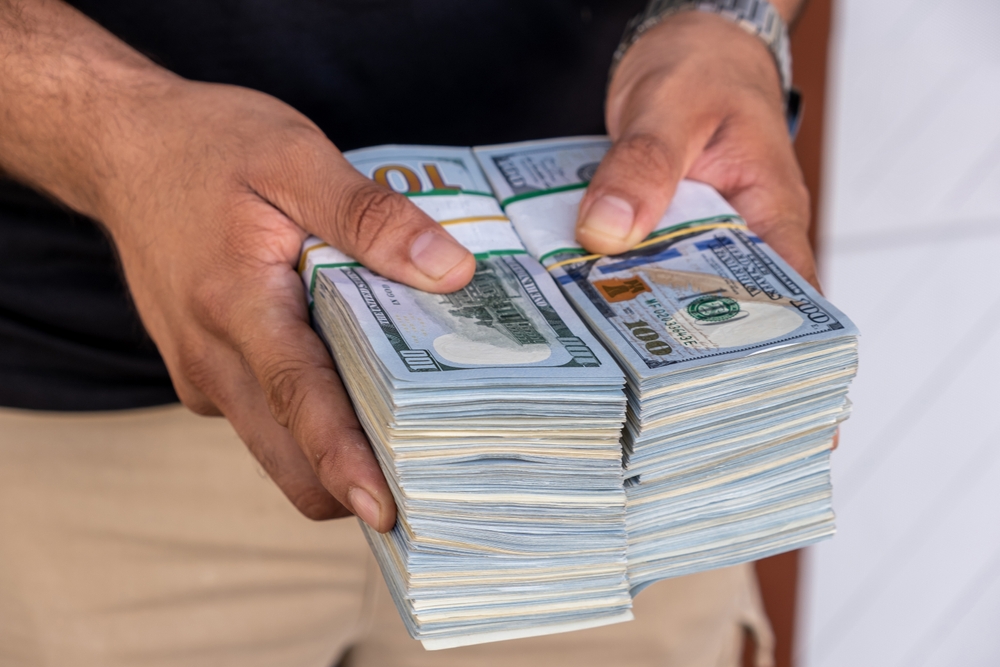
What a $100,000 bond depends on how you post it in Wichita, Kansas. The $100,000 figure is the full bond amount set by the judge as a guarantee that the person will return to court and follow release rules. Most families do not pay the full $100,000 out of pocket. Instead, they either post the full amount to the court and can get it back later, or they use a bail bondsman and pay a smaller nonrefundable fee.
Option one – paying the full bond to the court
If the judge allows a cash bond, you can pay the entire $100,000 directly to the court or jail. This is a deposit, not a punishment.
- Upfront cost – $100,000 paid to the court.
- Refund – the money is usually returned after the case ends if the person attends every court date and follows all conditions.
- Risk – if the person misses court or violates bond, the court can forfeit the bond and keep the money.
Option two – using a bail bondsman
Most Wichita families choose a surety bond through a bail bondsman. The bondsman posts the full $100,000 bond to the court, and you pay the bondsman a service fee. In Kansas, this fee is often around ten percent, though exact rates can vary.
- Typical bondsman fee – about $10,000 for a $100,000 bond.
- Refund – the $10,000 fee is nonrefundable because it pays for the bondsman’s service and risk.
- Collateral is common – for a bond this large, bondsmen often require collateral such as a house, car title, or other assets.
- Payment plans may exist – some bondsmen allow installments, sometimes with added service charges.
What affects the final cost
Even with a $100,000 bond, the out of pocket amount can shift based on the case.
- Charge seriousness and risk level – higher risk cases may require more collateral or a higher fee.
- Past missed court dates – can make bondsmen less flexible.
- Financial situation of the cosigner – strong cosigners may reduce collateral needs.
In Wichita, Kansas, a $100,000 bond usually costs either the full $100,000 paid to the court and refunded later if all rules are followed, or about $10,000 to a bail bondsman as a nonrefundable fee, often with collateral required.